- Common Ground
- Posts
- The 15% Congress: How America Lost Faith in Its Legislature
The 15% Congress: How America Lost Faith in Its Legislature
Why Congress Has Hit Record-Low Approval and How Structural Reforms Could Bring Cooperation Back

Common Ground
December 04, 2025
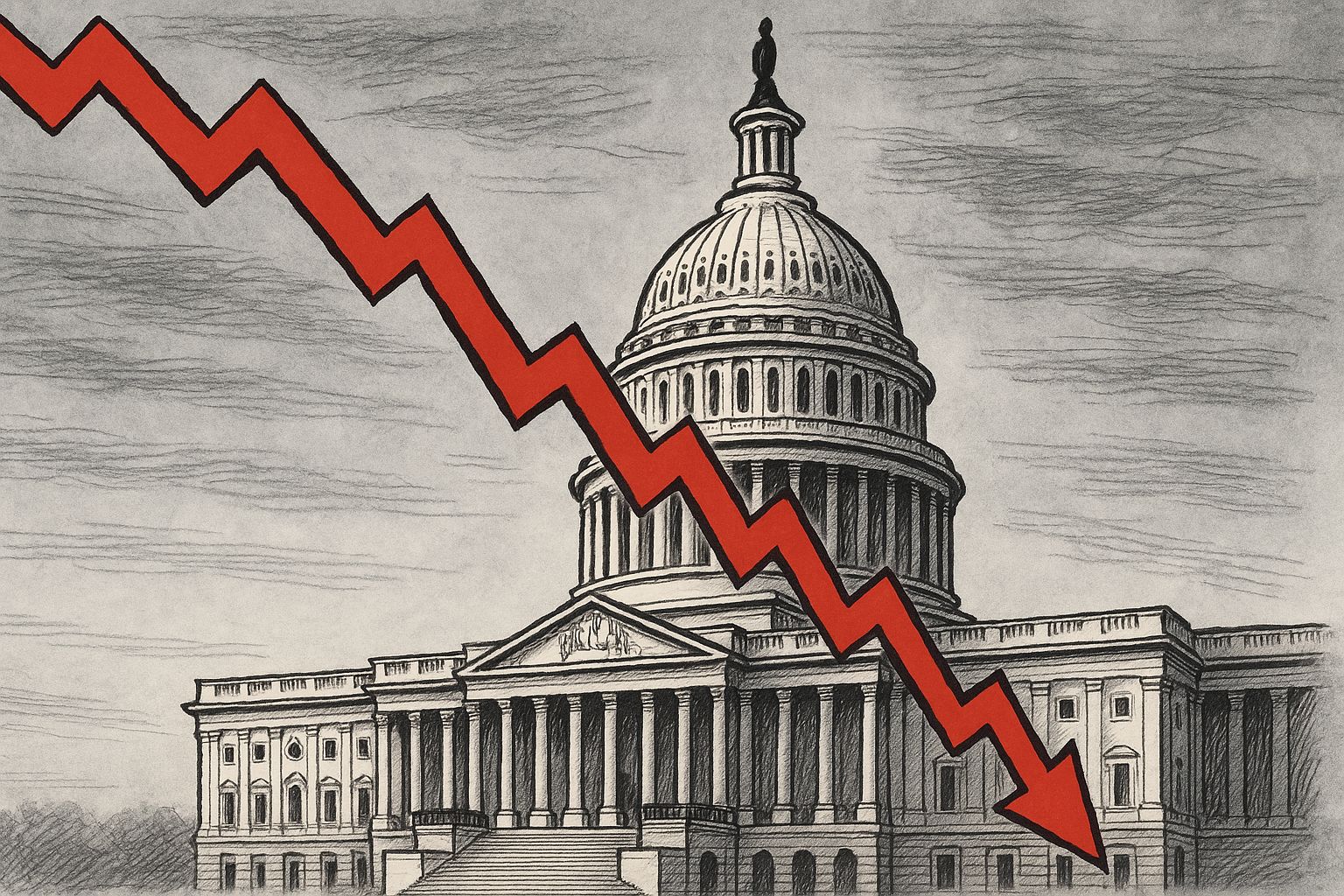
Congress has hit a political ice age. With just 15% approval and a staggering 79% disapproval, the legislative branch has reached a level of public distrust usually reserved for corporate villains or malfunctioning cable companies. But unlike those, the nation can’t just cancel its subscription. Congress is the only institution constitutionally required to represent the public’s will which makes its collapse in credibility all the more alarming.
How did it get this bad?

Congressional approval data by GALLUP
For many Americans, Congress no longer resembles a governing body but a theater of partisan performance. Shutdown threats pass for strategy, leadership battles drag on for weeks, and major legislation routinely dies on arrival. The constant brinkmanship has turned governance into a series of standoffs rather than solutions. Americans notice — and their patience is exhausted.
The disconnect is glaring: voters want progress, but Congress offers gridlock. The cost of living climbs, infrastructure crumbles, immigration policy remains unresolved, and healthcare costs strain families. Yet the daily headlines out of Washington rarely focus on any of these issues. Instead, political energy is spent on investigations, messaging bills, and internal feuds designed more to score points than solve problems.
This isn’t a sudden drop in trust; it’s the bottom of a decades-long slide. But hitting 15% is symbolic. It represents a breaking point, a moment when even habitual optimists have thrown up their hands. In a functioning representative republic, the branch closest to the people shouldn’t be the one least trusted by them.
A 15% approval rating isn’t just a statistic. It’s a flashing red warning light. And like the downward arrow slicing across the Capitol building in the illustration of this article, it points to a deeper truth: Americans aren’t just dissatisfied with Congress. They’re losing faith that it can govern at all.
Complaining feels great, but how do we fix Congress?
Well, for starters, we need them to work together again. After all, we elected them specifically to do so. In fact, a survey conducted last year by George Washington University’s Graduate School of Political management found that, “70% of voters believe bipartisan support is critical for major policy changes, but 82% characterize the bipartisan system of governing right now as broken.” This finding makes the divide quite clear: nearly three quarters of us expect them to work together while nearly all of us have little faith in their ability to do so.
Okay, so we don’t approve of their performance and we want them to work together. But, we doubt they can cooperate effectively. What does this tell us?
What this tells us is simple: Congress doesn’t just have a cooperation problem. It has an incentive problem. Lawmakers behave exactly as the system rewards them to behave. If voters want bipartisan action but the structure of Congress punishes compromise, the results will always look like the 15% approval rating we see today.
The first step is fixing how lawmakers get elected, because that’s where their incentives begin. In most House districts, the biggest threat to an incumbent isn’t losing the general election — it’s losing a primary to someone more partisan. When survival depends on appealing to ideological extremes, cooperation becomes politically dangerous. Reforms such as open primaries, ranked-choice voting, or nonpartisan redistricting can shift the incentives away from purity tests and back toward coalition-building. Competitive districts consistently elect more pragmatic members, while heavily gerrymandered districts produce legislators who fear compromise more than gridlock.
Congress also needs to restore the practical tools that once encouraged negotiation. One of the most overlooked is the return of transparent, accountable earmarks. For decades, targeted projects gave lawmakers tangible reasons to cooperate and produced local wins they could bring home to constituents. When members have a stake in each other’s success, bipartisan deals become easier, not harder, to reach.
Similarly, empowering committees and returning to “regular order” would force Congress to engage in real hearings, markups, and debates instead of last-minute, leadership-written bills that encourage party-line warfare.
Another problem is that members of Congress rarely know each other anymore. With most flying home every weekend, genuine cross-party relationships, once formed through shared time in Washington, have nearly vanished. When lawmakers only encounter each other as opponents on cable news, trust erodes and compromise feels unnatural.
Encouraging members to spend more time in D.C., participate in bipartisan retreats, or even engage socially can humanize adversaries and rebuild the personal trust essential to negotiation.
Finally, Congress must confront the reality that fundraising dominates much of its schedule. Members routinely spend 20 to 30 hours a week dialing for dollars, and fundraising is inherently partisan. Donors reward confrontation, not cooperation. Campaign-finance reforms or public financing models could reduce this pressure and give lawmakers both the time and political space to focus on governing rather than messaging.
Congress, like any workplace, responds to the incentives built around it. If those incentives continue to reward conflict, Americans will continue to get a Congress defined by conflict. But if the rules shift and if elections, committees, social norms, and funding structures start rewarding bipartisanship, then cooperation will no longer be a political liability. It will become a path toward progress, and Congress may yet become the functioning institution Americans expect it to be.